
How pest control software saves time
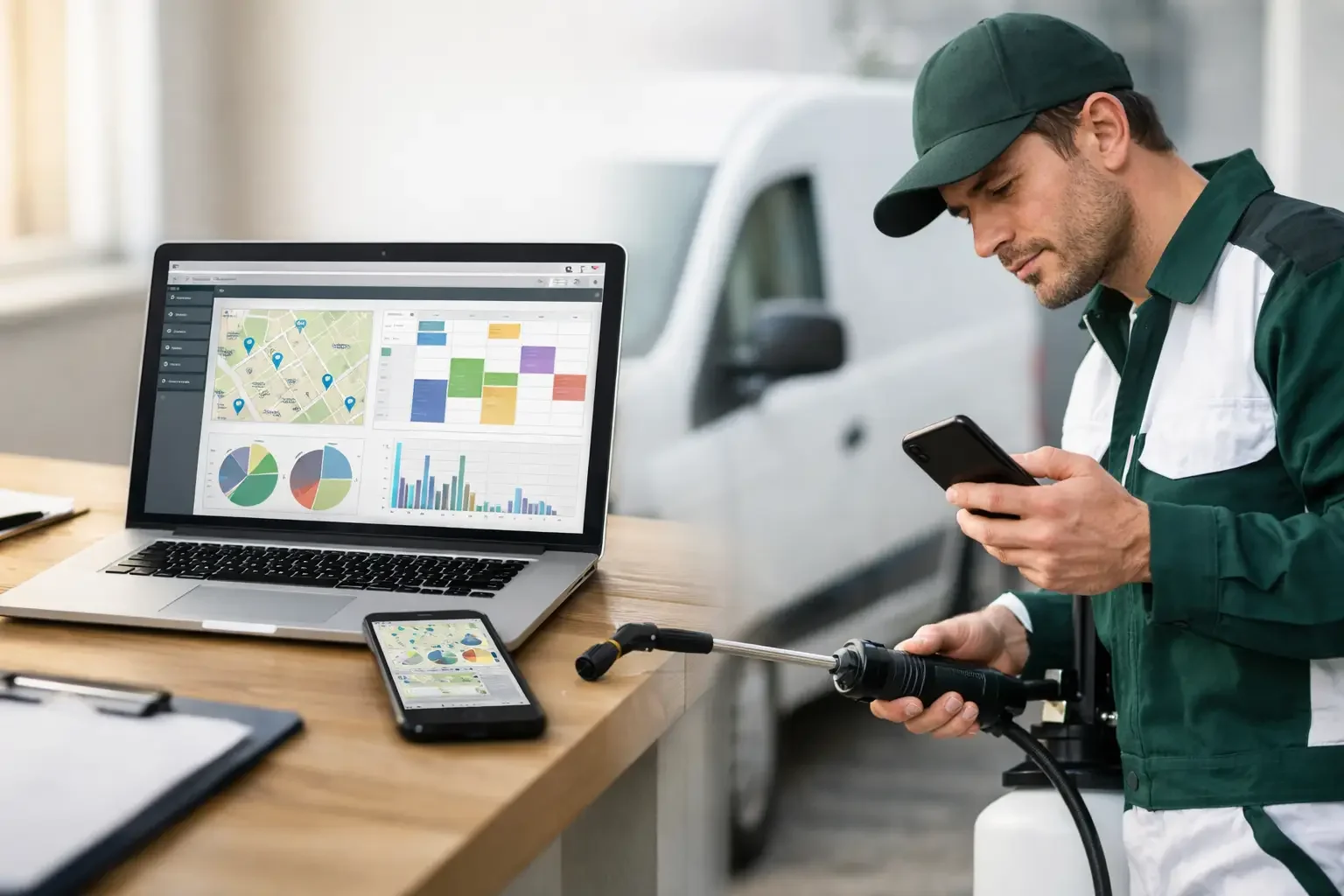
When a technician is finishing a site visit from the cab of a van, the office is chasing a service report, and a client wants proof of compliance before renewing a contract, paperwork stops being a minor irritation. It becomes a drag on cash flow, service quality and credibility. That is exactly where pest control software earns its place - not as another system to manage, but as the central tool that keeps the business moving.
For pest control companies, the pressure is different from many other service trades. You are not just scheduling visits and sending invoices. You are managing inspections, treatment histories, proofing recommendations, follow-up actions, site documentation and compliance records that may be checked by customers, auditors and regulators. If those details live across paper job sheets, spreadsheets, inboxes and individual staff members' phones, the business becomes harder to control than it needs to be.
What pest control software should actually solve
Good software should remove friction from daily operations. That starts with visibility. A manager should be able to see what jobs are booked, what has been completed, what is waiting for a quote, which contracts are due for renewal and where there are gaps in the schedule. Without that, teams end up reacting rather than managing.
It should also reduce duplication. In many pest control businesses, the same information gets written down several times - once when the enquiry comes in, again when a quote is prepared, again when a job sheet is issued, and again when the invoice is raised. That wastes time and increases the chance of errors. A purpose-built system carries data through the workflow so the office is not rekeying the same account details, site notes and service requirements over and over.
Then there is compliance. In pest control, records are not optional admin. They are part of the service. Visit reports, treatment records, trend analysis, bait plans, COSHH-related documentation and site recommendations all need to be accurate, accessible and consistent. Generic job management tools can cover some of the basics, but they often fall short where industry-specific reporting and audit readiness matter most.
Why generic field service tools often fall short
At first glance, many field service platforms look suitable. They can book jobs, assign engineers and send invoices. For a very small operation with simple needs, that may seem enough. The problem appears later, when the business grows or takes on more compliance-sensitive work.
Pest control is not just another mobile workforce sector. Commercial clients may need detailed service histories, trend reports, documented recommendations and proof that work aligns with standards and site policies. Food sites, manufacturing environments and large multi-site contracts often expect a level of reporting and consistency that general software was never designed to support.
That is the real difference between broad field service software and a system built for pest control. The latter reflects how the industry actually works. It understands recurring service contracts, technician reporting in the field, site-specific compliance needs and the operational importance of having one reliable record of every visit, action and recommendation.
The operational gains that matter most
The biggest win is usually time. Office teams spend less time chasing paper reports, entering duplicate data and checking who did what. Technicians spend less time filling in forms by hand and more time doing chargeable work. Managers spend less time trying to piece together the current status of accounts, jobs and contracts from disconnected sources.
But time saving on its own is only part of the value. Better control matters just as much. When scheduling, service history, communication and invoicing sit in one place, the business becomes easier to run. Missed visits are less likely. Outstanding actions are easier to spot. Renewal opportunities are clearer. Queries from clients can be answered quickly because the information is there.
This also affects customer confidence. If a client asks for the latest report, treatment record or recommendation history, a well-run business should not need to search filing cabinets or chase a technician after hours. Fast, accurate responses make the company look organised and dependable, which is often what protects long-term contracts.
Pest control software and compliance pressure
Compliance is where the cost of poor systems becomes obvious. If records are inconsistent, incomplete or difficult to retrieve, the risk is not just internal inefficiency. It can affect audits, customer trust and contract retention.
Different businesses will feel this pressure in different ways. A sole trader working mostly in domestic settings may prioritise speed and professional reporting. A larger commercial operator may need stronger oversight across teams, sites and standards. Businesses serving food production, storage or sensitive commercial environments may need to align more closely with frameworks and expectations linked to HSE, FSA, ISO, CRRU, CHAS, CEPA or BRC requirements.
That does not mean software replaces good operational discipline. It does mean the right system makes that discipline easier to maintain. Templates, structured reporting, stored service histories and centralised documents all help turn compliance from a scramble into a repeatable process.
What to look for in pest control software
The right choice depends on the shape of your business, but some requirements are fairly universal. You need a system that can manage enquiries, quotations, recurring contracts, scheduled visits, field reporting, invoicing and customer communication without relying on separate tools for each stage.
You also need field usability. If technicians find the system slow, awkward or too complicated on site, workarounds will appear immediately. Notes will go onto paper. Photos will stay on phones. Reports will be finished later, if they are finished at all. Software only improves operations when the field team actually uses it properly.
Reporting depth matters as well. Many firms do not realise what they are missing until a client asks for trend analysis, site history or a full account overview. The question is not just whether the software stores data, but whether it turns that data into something useful for service delivery, account management and renewal conversations.
Scalability is another practical issue. A one-person business may only need a tighter way to manage jobs and invoices today. In a year, it may need recurring contract control, staff permissions, central reporting and more structured compliance records. Choosing a system that fits only the current stage can create another migration problem later.
Implementation is where software projects succeed or fail
Even strong software can disappoint if implementation is treated as an afterthought. Businesses often focus on features and forget the work involved in changing habits. If the team does not understand how jobs should be logged, how reports should be completed, or how documents should be stored, the system becomes inconsistent very quickly.
The best results come when the business agrees a clear process first. Decide how enquiries enter the system, who approves quotes, when technicians complete reports, how invoices are triggered and where compliance records are reviewed. Once those rules are clear, the software can reinforce them.
Training matters too, especially across mixed teams. Office staff, managers and technicians use the same platform differently. Each group needs to understand the parts that affect their role and the downstream effect of getting data right. A missed field note does not just sit in isolation - it can affect invoicing, reporting and client confidence.
Software should support growth, not just admin
One of the most overlooked benefits of better systems is commercial. When your data is accurate and visible, growth becomes easier to manage. Quotes can be followed up properly. Contracts can be tracked before expiry. Performance across technicians or regions can be reviewed without guesswork. Leadership gets a clearer picture of where the business is profitable, where service levels are slipping and where opportunities sit.
That is especially important for firms moving from owner-led operations to structured teams. What works when one person knows every customer and every visit by memory does not work once the business expands. Software gives the business a shared operational memory. That reduces reliance on individuals and makes standards easier to maintain as the company grows.
For that reason, specialist platforms such as Service Tracker tend to stand out. They are built around pest control workflows rather than asking pest control businesses to adapt themselves to generic job management logic. That difference shows up in everyday operations, from compliance tracking to contract visibility and client reporting.
The right pest control software will not fix poor service or weak management. It will, however, remove a great deal of unnecessary admin, tighten control and make it easier to run a more professional operation. In a sector where documentation, responsiveness and audit readiness shape reputation, that is not a nice extra. It is part of how good businesses stay competitive.